

In what analysts are calling the most polarizing legislative move of the decade, Senator John Kennedy has introduced a bill that would permanently bar anyone not born on U.S. soil from serving as President — or even holding a seat in Congress.
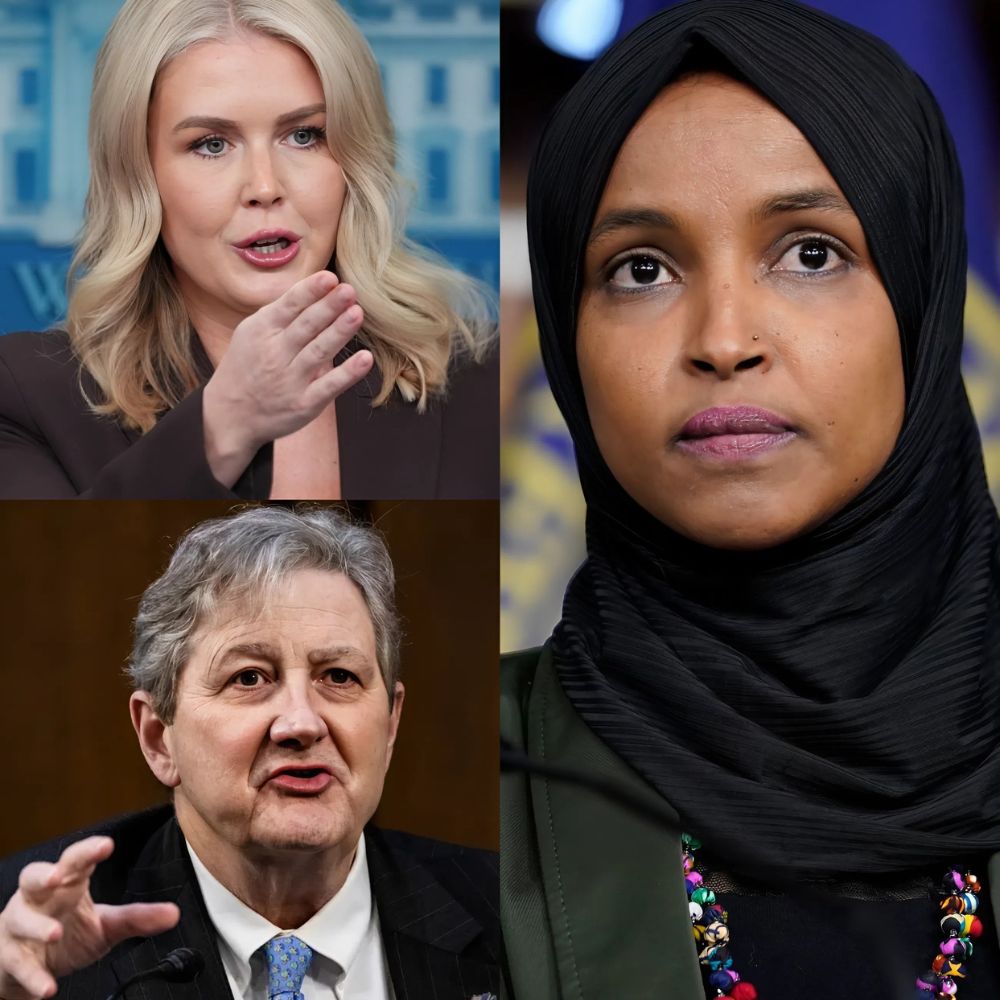
But the political explosion truly began when a surprise voice stepped into the fight: Karoline Leavitt, the fiery New Hampshire conservative and rising Republican star whose endorsement has turned a controversial proposal into a nationwide battlefield.
What began as a quiet policy draft circulating among Kennedy’s staff has now become a national referendum on identity, belonging, and the future of American democracy — and the entire country appears trapped in the blast radius.
A Bill Meant to “Protect America,” or One Designed to Redefine It?
According to Kennedy, the intent of the legislation is simple:
“If you weren’t born here, you’ll never lead here. That’s patriotism, not prejudice.”
His argument leans on a strict interpretation of loyalty — that only those “born under the American flag” can truly defend it. Supporters insist the bill is a necessary safeguard in a world of cyber-warfare, foreign interference, and shifting global allegiances.
But critics warn that Kennedy’s proposal goes far beyond existing constitutional standards, and would effectively erase millions of naturalized Americans from the political landscape overnight.
“This is unprecedented,” said one constitutional scholar. “It would remove entire communities from democratic participation and redefine American identity in a single stroke.”
Yet the true shockwave came not from Kennedy’s words — but from the political alliance that formed around them.
Enter Karoline Leavitt — and the Debate Erupts
Karoline Leavitt has never been shy about controversy. The former White House press aide turned congressional icon has repeatedly positioned herself as the unapologetic defender of “America First” values. But even longtime supporters did not expect her to step onto the battlefield this forcefully.
At a packed town hall in Manchester, Leavitt took the podium and declared:
“This isn’t anti-immigrant. This is pro-American. I am standing with Senator Kennedy because leadership must begin with loyalty you cannot download, purchase, or adopt later in life.”
Her remarks spread across social media within minutes, igniting a wildfire of commentary — from praise to outrage, from full-throated support to fierce denunciation.
Within hours, Leavitt was trending nationwide.
Political strategists from both parties agree:
Her endorsement didn’t just fuel the debate — it detonated it.
Supporters Celebrate the Alliance as a ‘Turning Point’
Conservative groups have rushed to frame the Kennedy-Leavitt alliance as the moment the GOP “finally drew a clear line in the sand.”
In interviews, supporters describe the bill as: “common sense,” “a national security necessity,” “the birthright of American democracy,” and “a long overdue clarification of constitutional intent.”
Some even praised Leavitt for “saying what other politicians are too afraid to admit.”
At a rally in Louisiana, Kennedy played to roaring crowds: “If being born American isn’t special, then nothing is.”
Meanwhile, Leavitt doubled down at an event in Nashua:
“Citizenship by choice is admirable. Citizenship by birth is irreplaceable. And leadership demands the latter.”
To their supporters, this is not about exclusion — it is about preservation.
But to critics, the bill is nothing short of an ideological earthquake.
Opponents Warn of a ‘Democratic Meltdown’
Progressive groups, immigrant rights advocates, and even several moderates within the GOP have condemned the bill as xenophobic, unconstitutional, and fundamentally anti-American.
One Democratic strategist called it:
“A betrayal of everything this country claims to stand for.”
A progressive commentator on MSNBC went further:
“This is an attempt to shrink the definition of American until it fits one political party. If this passes, naturalized citizens stop being equal. That’s not patriotism — that’s segregation with a flag wrapped around it.”
University protests erupted in Chicago, Boston, and Los Angeles.
Civil rights organizations have already promised lawsuits.
Immigrant communities say they are “terrified” of what comes next.
Yet the fiercest backlash has been directed at Karoline Leavitt herself — not Kennedy.
Why Leavitt’s Involvement Matters More Than Kennedy’s
Kennedy is a seasoned senator known for his blunt rhetoric. Leavitt, however, is young, influential, energetic, and rapidly becoming a conservative cultural icon.
Her support signals to a new generation of voters that this proposal is not an old-guard Republican idea — but a forward-moving political vision.
That is precisely what terrifies her critics.
A senior Democratic advisor warned:
“Karoline Leavitt is the most concerning part of this. She can rally the youth vote. Kennedy can’t.”
Some Republicans quietly agree, worrying that the proposal will become the defining issue of the election cycle — dividing the party when unity is essential.
But Leavitt appears unfazed.
Behind Closed Doors: A Strategy or a Gamble?
Insiders describe the Kennedy-Leavitt partnership as “unexpected but strategic,” noting that the timing may not be accidental.
Several political analysts argue that:
The GOP is using the bill to test public appetite for stricter definitions of citizenship.
Leavitt is positioning herself as the torchbearer of a new nationalist movement.
Kennedy is leveraging Leavitt’s popularity to boost support among younger voters.
Others see a more cynical move: a calculated push to divide the electorate before the primaries begin.
Regardless of the motive, one thing is clear — this is no longer a policy debate.
It is a culture war moment.
The Rhetorical Battle Intensifies
Television networks have scrambled to secure interviews.
Editorial pages are filled with dire warnings or passionate endorsements.
Cable commentators frame the bill as either: “the most patriotic legislation of our lifetime,” or “the biggest assault on American values since McCarthyism.”
At the heart of the debate is a single question:
What does it mean to be American enough to lead America?
Kennedy says the answer is simple.
Leavitt says the answer is moral.
Critics say the answer is far more complex — and that the bill does not merely define leadership, but excludes millions from it.
What Happens Next?
The bill is scheduled for preliminary hearings next month, where it is expected to encounter fierce resistance. Several senators have already vowed to block it. Constitutional experts predict that even if it passes Congress, it would face immediate judicial challenges.
But the true battle will not unfold in the courtroom — it will unfold in the public square.
Every poll taken since the announcement shows one defining truth:
America is split clean down the middle.
And Karoline Leavitt, whether intentionally or not, has become the face of that divide.
A Political Firestorm With No Signs of Slowing Down
As rallies grow larger, interviews grow sharper, and social media explodes with equal parts fury and celebration, one thing has become undeniable:
The Kennedy–Leavitt alliance has touched the deepest fault lines of American identity.
Whether this movement reshapes the Constitution or collapses under national backlash, the consequences will be felt long after the headlines fade.
What began as a proposal has become a battle cry.
What began as a bill has become a litmus test for loyalty.
And what began as a political statement has become a defining moment of the election cycle.
The firestorm is not ending.
It is only rising.