

It was supposed to be just another live TV performance — until Whoopi Goldberg’s offhand remark detonated a moment that no one in the studio, or in the country, would ever forget.
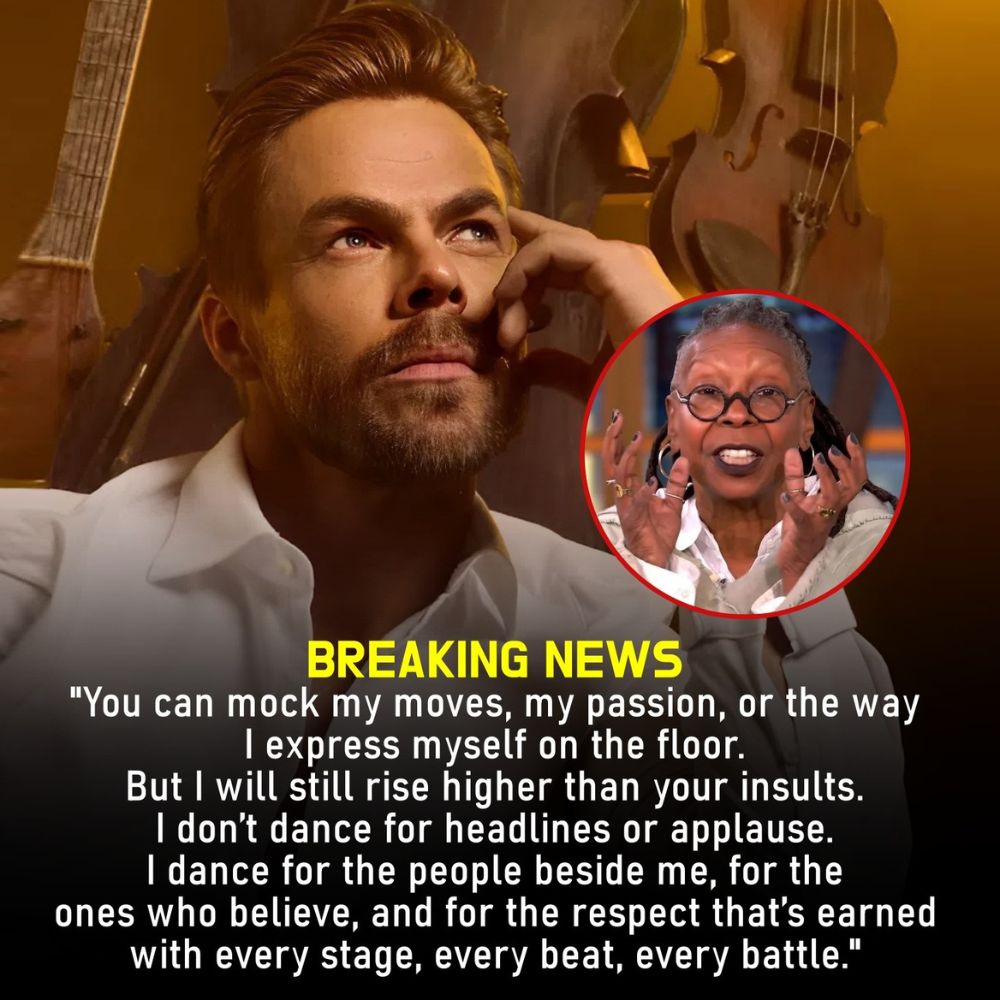
When she leaned toward her mic and muttered, “He’s just a stupid dancer,” the audience gasped softly, but Derek Hough didn’t move. He didn’t flinch, didn’t look shaken, didn’t let a single muscle reveal what he was thinking. Instead, he slowly raised his head, locked his eyes on the live camera, and delivered a single sentence that would send shockwaves across the nation within minutes.
And that was when the world realized this wasn’t just a dancer they were watching it was a man with something to say, something powerful enough to silence millions.
Within thirty seconds, the studio fell silent. Within five minutes, social media exploded.
Within one hour, the clip had crossed every platform, every country, every age group and the moment became more than viral; it became historic.
Derek Hough, known for his grace, his discipline, and his ability to speak with movement rather than words, suddenly became the voice of every artist who had ever been underestimated, every performer who had ever been dismissed, every dreamer who had ever been laughed at.
And the beauty of the moment was not in the confrontation it was in the compassion he delivered instead of anger.
His sentence, simple but seismic, was this:
“If being ‘just a dancer’ means lifting people’s spirits when the world feels heavy, then I’m proud to be one.”
The studio froze. Cameramen looked at each other.
Even Whoopi Goldberg lowered her gaze as the weight of his words hung in the air like a bell still ringing long after it was struck.
But Derek didn’t stop there.
He stepped forward, hands slightly trembling – not from fear, but from emotion and addressed the millions watching from home.
He spoke about the nights he danced through pain, the performances he dedicated to people battling illness, the letters he received from fans who said his art helped them survive their darkest moments.
He spoke about how movement can heal, how rhythm can comfort, how expression can reach people in ways words sometimes fail to.
And he reminded the world that no dream is small, no talent insignificant, no passion foolish – not when it brings light to someone else’s life.
The comment section of the livestream transformed instantly.
Thousands of dancers, singers, painters, writers, nurses, teachers, single parents flooded the chat with stories of being belittled, people from every walk of life dismissed, or told they’d never be enough.
Derek’s moment became theirs. His courage sparked theirs.
By the time the show cut to commercial, hashtags erupted globally:
#ProudToBeADancer
#DerekHough
#ArtMatters
#RespectEveryDream
Talk shows replayed the clip. News anchors analyzed it. Psychologists weighed in. Parents showed it to their children.
And for once, social media wasn’t divided it was united by a message that felt deeply human.
But the most emotional moment came later that night.
Derek posted a short video from his dressing room still in costume, sweat drying on his forehead, his voice soft but steady.
He thanked everyone for their support, but then he said something that struck the world as even more powerful than his live TV response:
“I wasn’t defending myself today. I was defending every kid who’s ever been told their dream doesn’t matter.”
And with that sentence, Derek transformed from a performer into a symbol – a reminder that dignity doesn’t require shouting, strength doesn’t require fists, and compassion can be more powerful than confrontation.
The next morning, newspapers across the country printed headlines about the viral moment.
But those who watched it live knew something deeper had happened.
They witnessed a man rise above insult, above ego, above noise and choose kindness instead of cruelty.
And maybe that’s why the world couldn’t stop talking about it.
Because sometimes, the strongest people are the ones who dance through pain… and the most powerful messages are delivered not through anger… but through grace.