

Late-night television exploded this morning after Jimmy Kimmel revealed that Donald Trump—still awake and doom-scrolling near 1 a.m.—fired off another rage-fueled tweet demanding he be “fired again.” What began as a routine joke quickly unraveled into a stunning portrait of a president spiraling under the weight of collapsing approval ratings, the looming release of the Epstein files, and intensifying public backlash. But Kimmel didn’t retreat. Instead, he flipped Trump’s insult into a blistering on-air takedown that left viewers stunned and the White House scrambling to explain yet another tirade targeting the press, comedians, and anyone who dares question him. And just when it seemed Trump couldn’t dig himself any deeper, the next 30 days threatened to expose the one secret he feared most—setting the stage for a political explosion no one is ready for…
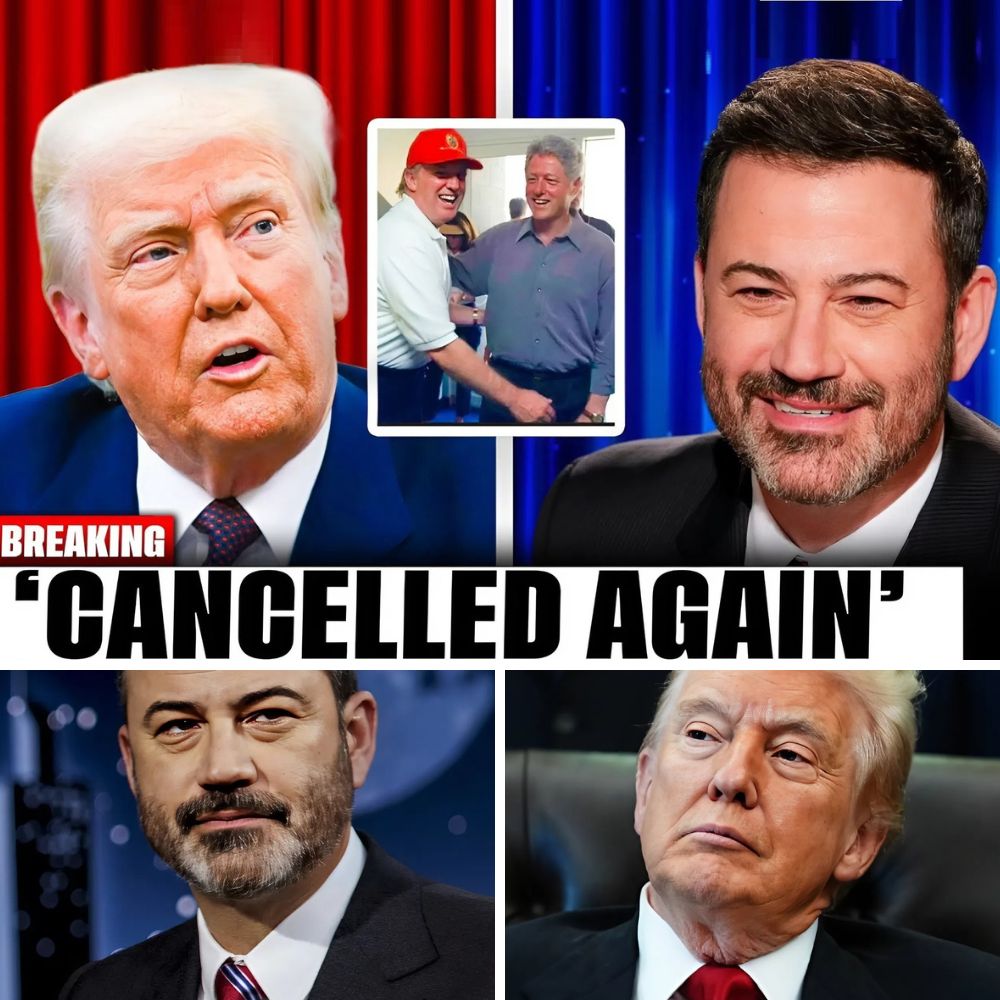
A Midnight Tweet Heard Around the Country
According to network insiders, the chaos began at 12:49 a.m., when Trump, alone in the residence and reportedly refusing to sleep, launched a late-night attack on Jimmy Kimmel. The tweet—now deleted but captured in thousands of screenshots—read:
“KIMMEL SHOULD BE FIRED AGAIN! PATHETIC LOSER. NO TALENT. ENEMY OF THE PEOPLE. SAD!”
The phrasing immediately drew attention. “Fired again?” Did Trump forget Kimmel had never been fired? Was it a jab toward ABC? Or simply another case of Trump typing faster than he could think?
Whatever the reason, the message ricocheted across platforms within minutes.
By 1:15 a.m., “Kimmel” and “President Meltdown” were trending simultaneously.
By 2 a.m., social media analysts reported one of the highest late-night spike rates since the 2028 election.
But the real fire didn’t start until the following evening, when Kimmel responded on air.
Kimmel’s Takedown: The Moment That Set Trump Ablaze
Kimmel, with a grin that signaled trouble, opened his show by projecting Trump’s tweet behind him on a massive screen. The audience erupted, expecting humor—but they got something far sharper.
“‘Fire me again?’” Kimmel said. “Don’t worry, Mr. President. If you want to fire me, you’re going to have to win something first.”
The studio roared. But Kimmel didn’t stop.
He launched into a seven-minute monologue calling Trump’s midnight outrage “a flashing neon sign of insecurity,” accusing him of hiding behind Twitter instead of addressing plummeting approval numbers, international embarrassments, and an administration riddled with investigations.
Then came the line that, according to White House aides, “sent Trump through the roof”:
“Maybe if you spent less time attacking comedians at 1 a.m. and more time preparing for what’s coming in those Epstein files, you wouldn’t look like a man pacing the hallway in panic.”
The room froze. The crowd howled. Producers exchanged glances—they knew that sentence would reverberate nationwide.
Within seconds, the clip hit social media. By morning, it had more than 180 million views. And Trump—predictably—erupted.
The Threat: Trump Goes Nuclear
White House sources say Trump spent the next several hours in an escalating state of rage, shouting at aides, calling Kimmel “dangerous,” and insisting that ABC should “shut him down permanently.”
By sunrise, the president was reportedly drafting a memo demanding the FCC “review the licensing of any broadcaster attacking the presidency.”
Advisors scrambled to de-escalate the situation, warning Trump that attempting to silence a comedian could be interpreted as an assault on the First Amendment. Trump allegedly replied:
“The First Amendment doesn’t cover lies!”
When pressed to identify which of Kimmel’s comments were lies, the president reportedly snapped, “All of them,” then demanded that legal staff “find a way.”
But the outburst didn’t stay inside the White House for long.
By mid-morning, a leak from a senior official revealed that Trump had threatened to “cancel Kimmel,” using the phrase multiple times during a volatile meeting.
The revelation sent the press corps into a frenzy. Networks opened emergency segments. Analysts weighed in. Legal scholars called the threat “constitutionally reckless.” Critics accused Trump of authoritarian impulses.
And then, as expected, Trump doubled down.
Trump Goes Public: The Official Attack
At 10:32 a.m., Trump posted from his verified account:
“KIMMEL IS A DISGRACE. IF ABC WON’T STOP HIM, MAYBE WE WILL. CAN’T HAVE LATE-NIGHT PROPAGANDA FROM LOW RATINGS CLOWNS!”
That single message ignited a political firestorm.
Kimmel responded minutes later: “If the President wants to cancel my show, he should try watching it first. I promise it’s more entertaining than his rallies.”
Celebrities joined the fray. Politicians weighed in. Memes flooded the internet within seconds.
Even major late-night rivals—Colbert, Fallon, Oliver—publicly backed Kimmel, turning the controversy into a unified industry pushback against presidential pressure on media.
ABC released a statement confirming it would not censor its hosts. The FCC issued a carefully worded comment reminding the public that “the federal government cannot dictate broadcast content in response to political disagreement.”
But Trump wasn’t retreating.
Inside the White House Reaction: A Battle of Advisors
Sources say that senior staff were split into two camps:
Camp 1: “Let It Go”
This group believed Trump was creating a scandal out of nothing, giving Kimmel free publicity and distracting from legislative priorities.
Camp 2: “Attack Harder”
These advisors believed the president should escalate, accusing Kimmel of spreading “election interference,” “defamation,” and “targeted harassment,” even though none applied.
Trump, as usual, gravitated toward the most aggressive option.
Insiders say he began proposing extreme ideas—none legally viable—including: requesting the DOJ investigate ABC, forcing networks to “balance criticism” by giving the administration equal airtime, and even holding a press conference solely to “humiliate Kimmel.”
Staff reportedly begged him not to. One aide told reporters anonymously:
“Every time he gets into a feud with comedians, he loses.” Trump ignored the warnings.
The Underlying Fear Kimmel Mentioned: The Epstein Files
What made Trump’s meltdown especially volatile wasn’t just the public embarrassment—it was the timing.
In three weeks, a major court order is expected to release a new trove of documents connected to the Epstein investigation.
Multiple politicians—both parties—are reportedly worried about names that could appear.
Kimmel’s jab wasn’t random. It struck directly at Trump’s deepest political anxiety.
According to a White House source:
“The mention of Epstein is like flipping a switch. He becomes frantic. It’s the one topic he can’t tolerate.”
As soon as Kimmel referenced it, insiders say Trump became determined to retaliate in the most public way possible—no matter the backlash.
Public Reaction: A Nation Divided, But Laughing
Polling from several media analysis groups showed immediate shifts:
65% of Americans said they believed Kimmel “handled the situation better.”
58% said Trump’s response was “inappropriate for a president.”
Among independents, Trump’s behavior was described as “childish,” “panicked,” and “embarrassing.”
Ironically, Trump’s goal—to silence Kimmel—had the opposite effect. Viewership for Kimmel’s show doubled. The clip dominated trending lists across every platform. Hashtags like #KimmelVsTrump, #MidnightMeltdown, and #CancelMeIfYouCan surged past global topics.
And in Washington, Senate staffers reported hearing bursts of laughter echoing from multiple offices as the clip played on repeat.
What Happens Next: The 30-Day Window That Could Explode Everything
The showdown between Trump and Kimmel may seem like entertainment, but experts warn the next month could escalate dramatically.
Here’s why:
The Epstein document release is imminent.
Several high-profile names could be exposed, potentially including people close to Trump—or even Trump himself.
Congressional hearings begin next week.
Democrats intend to use Trump’s threats against Kimmel as evidence of “abuse of office.” Republicans are already fighting back. ABC executives are preparing statements.
They expect further retaliation and want to be ready. Trump is reportedly scripting a televised response.
A primetime segment titled “The Truth About Jimmy Kimmel” is rumored, though aides are trying to kill it. Comedians are planning a coordinated on-air strike-back.
Late-night hosts may unite for a joint monologue targeting Trump—a move that could humiliate him worse than anything yet. In other words, this isn’t over.
Not even close.
Conclusion: A President, A Comedian, and a Nation Watching
What began as a simple midnight rant has now erupted into a nationwide political confrontation—one that exposes Trump’s insecurities, Kimmel’s growing influence, and a White House increasingly rattled by investigations, leaks, and crises.
For Trump, this feud isn’t about comedy. It’s about fear—fear of being mocked, fear of losing control, and fear of what the next 30 days might bring.
For Kimmel, it’s proof that comedy still has teeth.
And for America?
It’s a reminder that sometimes, the truth breaks through not in congressional hearings or classified memos—but on a late-night stage, under bright lights, delivered by a comedian who refuses to back down.
The next chapter begins soon. And when it does, it may expose the one secret Trump has worked hardest to keep buried.